10 minutes read time.
There is this unique space where Traditional Witchcraft meets Jewish magic.
Let’s explore some areas where there is shared lore and perhaps a similar current of power between European folk magic and Jewish witchcraft.
Contents
- What is Traditional Witchcraft?
- What does Jewish magic have to do with Traditional Witchcraft?
- How Magic Entered the World: The Fallen Angels
- The Demon Lilith and The Angel Azazel
- A Crossroads of Traditional Witchcraft and Jewish Witchcraft: Magic from the Stars
- Sources

What is Traditional Witchcraft?
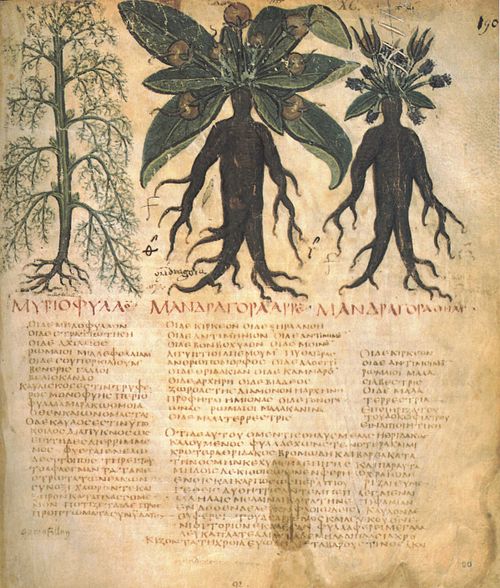
Traditional Witchcraft is a broad term for some contemporary witches who practice European folkloric magic and witchcraft traditions. Many of these practices are also inspired by Neo-pagan traditions such as Reclaiming and Western Occultism.
Traditional witchcraft has a focus on accessing the power of local and seasonal land magic, sometimes working with faeries, the dead, European folk magic, and sometimes spirits that are termed devils or genii loci.
Traditional Witchcraft has solo and coven practitioners, some initiatory lineages, a vibrant plant and herbal heritage, and a visionary, ecstatic or shamanic dimension to the practices. It’s found alongside terms like the Crooked Path, the Left Hand Path, Modern Traditional witchcraft, folkloric witchcraft, witchery, and the Poison Path.
What is Jewish Magic?
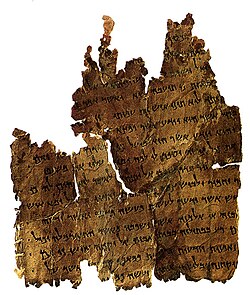
Jewish mystical practices span centuries and cover a wide region. Magic has always been a part of Judaism as it was born from an area of the ancient world where magic was ingrained in the everyday landscape. Ancient Canaan, Egypt, and Mesopotamia were steeped in the magical.
Jewish magic is a living tradition that moves where the Jewish people move. As someone who comes from this diasporic lineage, I recognize the traditions of my people as being where I am. Local traditions have blended with Jewish mysticism and traditions wherever we are, creating a rich matrix of practices all over the world.
Jewish magic will look different depending on who is practicing it. It can rely on Jewish folklore and practices to ward off the evil eye as much as Jewish Kabbalah using practices found in texts like the Sefer Yetzirah (book of creation) and the Zohar (book of splendor).
Kabbalistic texts contain wisdom on cosmology, meditation, breath and dream work, and magic for traveling along different spiritual planes, meeting angels, and communing with the Divine.


What does Jewish magic have to do with Traditional Witchcraft?
A large portion of Western Esotericism has drawn inspiration from Jewish mysticism (as well as Christian mysticism). Jewish magic intersects with the occult traditions developed in Europe throughout the Middle Ages and beyond, including modern Traditional Witchcraft.
Historian Carlo Ginzburg in his book Ecstasies: Deciphering the Witches’ Sabbath, goes into detail on the rampant antisemitism in Europe at the time and how this contributed to Jewish people being persecuted for doing ‘witchcraft’ (1). What was really going on was that Jewish religious practices were frequently being interpreted as malefic magical rites by outsiders looking in.
On the other hand, while Jewish spiritual practices were ‘othered’ or taboo in Europe, this also contributed to Jews being seen as more magical or charged up with power.
This is one of the contributing factors for why we find Jewish magic and lore in the esoteric traditions of Western Occultism. Other reasons are that as pagans were converting to Christianity, pagan beliefs were organically being blended with Christian and Jewish mysticism and religious beliefs.
While these traditions emerged from different cultural and religious contexts, there are places where the roots of magic appear to intersect.

How Magic Entered the World: The Fallen Angels
One area where we can see Jewish mystical tradition and Traditional Witchcraft is in how magical power is transmitted to humans. In the Book of Genesis it says,
“The Nephilim were on the earth in those days, and also after that, when the benei ha-elohim (son’s of God) came to the daughters of men, and they bore children to them; these were the mighty men that were of old, the men of renown.“
Some have interpreted the Nephilim to be giants, the offspring of fallen angels from the comingling of angelic and human powers. The spirits of angels, here known as the Ben Ha-Elohim, translated from Hebrew as Sons of the Gods, find their roots in Canaanite beliefs of the time.
This story of the Fall Angels is further elucidated on in the Book of Enoch (not canon in Judaism). In this text it says,
“The angels taught the daughters of men incantations, exorcisms, and the cutting of roots, and revealed to them healing plants.”
The telling of Fallen Angels bringing magic to humans shares similar origin stories of how humans obtained magic in the Faerie faith and folk traditions from Europe, especially from Wales, Scotland, and Ireland.
These stories tell of spirits falling to Earth (perhaps akin to fallen angels) and bringing with them their magical powers (2). In both traditions, magical knowledge is transmitted to us through contact with intelligences of the spirit world.
The Demon Lilith and The Angel Azazel
Another area of overlap between traditions is in figures from Jewish lore specifically Azazel and Lilith, who are prominent entities in many contemporary traditional witchcraft lineages. Let’s explore some of these entities starting with the Fallen Angel, Azazel.
The Fallen Angel Azazel
In traditional witchcraft there is deep lore around the Hidden Witch Father or Horned God coming to witches as Lucifer, a being of light and illuminator of the mysteries.
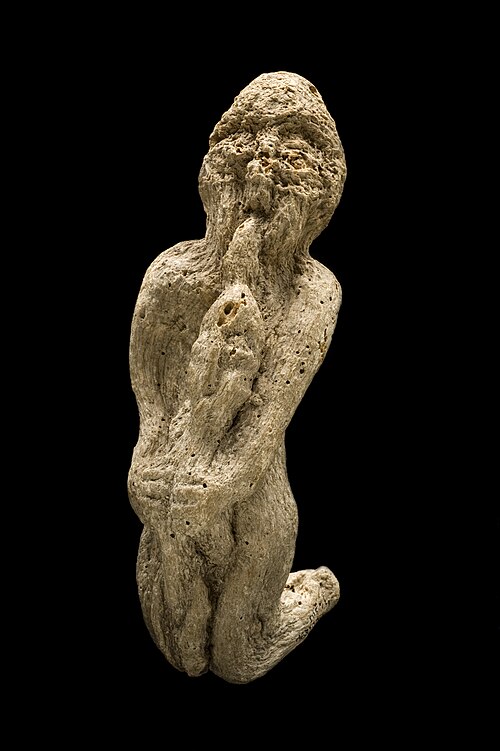
Another dimension to the story of this horned-god being is referenced in the figure of the fallen angel Azazel, who also shares his magical knowledge with humans (3).
In the Book of Enoch 10:8 it says,
“The whole earth has been corrupted through the works that were taught by Azazel: to him ascribe all sin.”
Although it is interpreted that Azazel was bringing ‘sin’ into the world. Some witches and occultists have interpreted these stories not as the introduction of evil, but as the transmission of forbidden knowledge.
It is a similar motif to the Serpent guiding Eve to eat the forbidden fruit in the Garden of Eden as an initiation into Divine knowing.
In Genesis 3:4-5, it says,
“And the serpent said to the woman, “You are not going to die, but God knows that as soon as you eat of it your eyes will be opened and you will be like divine beings who know good and bad.”
These stories of Azazel and the Serpent demonstrate that certain spirits take an interest in humans, revealing to us occult or secret knowledge, giving us access to our ‘cunning fire’, our power as witches.

The Queen of Demons Lilith
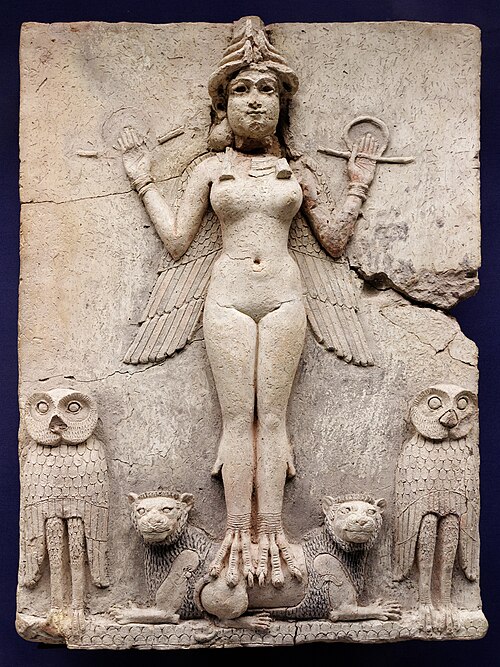
Another figure found in both Judaism and Traditional witchcraft is Lilith. While she is not likely to be called upon in most conventional Jewish practices, there is a strand of Jewish feminism and goddess worship that has reclaimed her (4). In general, Jewish magic takes measures to protect against Lilith.
Lilith is a sheydim, a type of betwixt spirit from Jewish tradition and is sometimes referred to as the Queen of ‘Demons’. An excellent podcast called The Hidden Djinn talks about Lilith as a figure that connects her with the Jinn of Arab lore.
Her story goes back to the Garden of Eden, where, dissatisfied with being Adam’s wife, she decides to carve her own path. Uttering the ineffable name of God, she claimed her freedom, sovereignty, and power, leaving Adam and the garden of paradise behind.
Walking one’s own path isn’t easy, it comes with consequences, and this is symbolized in Lilith’s story. Outside of the garden of Eden, Lilith made her home in the desert wilderness, the preferred dwelling place of the sheydim.
Three angels, Senoy, Sansenoy, and Semangelof, come to her at God’s command demanding she come back to the Garden of Eden to be with Adam. But she refused to give up her freedom and return to the life she had had before. For this she was cursed by the Divine.
Lilith chose to leave her paradise home in the Garden of Eden for the sake of her autonomy and self-determination at great personal sacrifice. Her story carries echoes of the initiatory path of witchcraft.
In Traditional witchcraft, Lilith resides in a special place as guide, goddess, and queen. She is sometimes called upon as the Queen of Witches and might be petitioned to strengthen our magic, teach us the ways of the craft, and other initiatory rites.
My work with this spirit has fluctuated over the years as cavorting with proposed demons has its sticky points. I have found this to be true of Lilith. She is a powerful entity to befriend, but if you call upon her, be ready to get into some nitty-gritty spiritual work.

The Subversive Guides of Witches
Who gets to have magic?
For centuries, distinctions have been imposed on the collective around who gets to have access to spiritual knowledge. Spiritual power (magic) is often reserved for those operating within approved and dominant religious systems.
For magic to be shared with witches by these ‘maligned’ beings, it lends credence to the subversive spirit that The Witch archetype represents.
Regardless of how many times we hear the sentiment that ‘there is no devil in the craft’, witchcraft does have a history of aligning with the outcast or Fallen Angels narrative. This fits with the local land spirits, deities, giants, and devils who were driven deeper underground with the rise of Christianity, making the Witch a human mediator who resides at the edges.
When folk witches obtain power with the support and encouragement of these beings, who are disruptive to the dominant paradigm, it appears we are undermining the power structures in play.
But it might go even deeper than this. Many of us are answering to a deeper call, the forces of creation itself. These forces wear no human masks, but primordial powers that go even deeper than us.
A Crossroads of Traditional Witchcraft and Jewish Witchcraft: Magic from the Stars
While there is a history of antisemitism that is a large part of the evolution of European occultism and witchcraft, I think there are some bits of magic we Jewish witches can still relate to from traditional witchcraft.
We know that western occultism has been heavily influenced by Jewish and Christian mysticism. In bringing the magic of both my European and Jewish ancestors together in my practice, I have found that discernment, curiosity, and openness have helped me braid the various threads of my ancestral magics together.
For one, there is a current of power that includes spirits from a celestial elsewhere, whether described as angel or Faerie in origin.
These beings are seen as helping humans develop in their magical skills and transferring magical power to us. As a spirit worker, these stories give me a creative narrative to connect my magic with.
I find it fascinating that spirits from different traditions can occupy similar roles as teachers and initiators into magical knowledge.
This open-minded perspective helps me expand my vision of the complexities of the spirit realm. As Jewish mysticism and European folk magic continue to inspire new generations of witches, these crossroads remind us that ancestral magic is never lost.
I am curious if there are others out there practicing Jewish witchcraft alongside some traditional witchcraft elements and what your practices look like? I invite you to share in the comments.

Sources
- Ginzburg, Carlo. Ecstasies : Deciphering the Witches’ Sabbath. Chicago, University Of Chicago Press, 2004.
- Morgan, Lee. Sounds of Infinity. The Witches’ Almanac, 5 Aug. 2019.
- Jackson, Nigel. Masks of Misrule : The Horned God & His Cult in Europe. Chieveley, Capall Bann Publishing, 1996.
- Barbara Black Koltuv. The Book of Lilith. Nicolas-Hays, Inc., 15 Jan. 1986.
- Hammer, Jill. Return to the Place: The Magic, Meditation, and Mystery of the Sefer Yetzirah. 7 Sept. 2020.
- Frankiel, Tamar, and Judy Greenfield. Entering the Temple of Dreams. Turner Publishing Company, 10 Aug. 2012.
- Ahuvia, Mika. On My Right Michael, on My Left Gabriel : Angels in Ancient Jewish Culture. Oakland, California, University Of California Press, 2021.


Leave a Reply