8 minutes read time.
Why choose to connect with poisonous plants? At first glance, it might seem macabre, dark, or even a little dangerous. But there is something much deeper to be gleaned from what some call the Poison Path.
Let’s meet the witching herbs that inhabit the world of poisonous plant medicine. These plants are often mentors, guides, and healers for occult herbalists walking between worlds.
The Poison Path isn’t necessarily about ingesting mind-altering plants, but about building relationships with the spirit of the poisonous plants and their mysteries.
Table of Contents
What is the Poison Path?
Let’s begin by clarifying what the Poison Path actually means. In contemporary terms, the Poison Path is often used to refer to herbal or witchcraft practitioners who partner with the spirits of poisonous plants and baneful herbs.
Examples include:
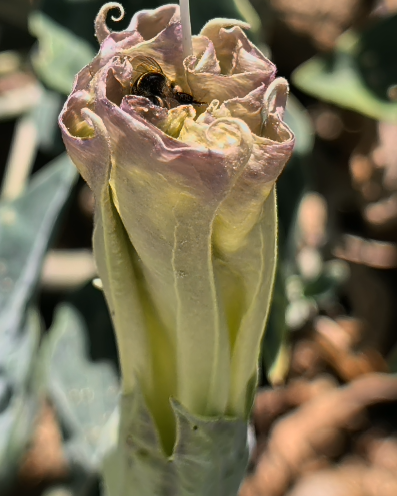
- Datura
- Mandrake
- Belladonna
- Foxglove
- Monkshood
- Opium Poppy
- Henbane
- Fly Agaric
- Yew Tree
These plants often have properties that are psychoactive and entheogenic but not necessarily psychedelic, although a witch might also include some psychedelics as a part of their Poison Path explorations.
Many of the poisonous plants can be toxic and/or deadly at certain doses. Their effects can include severe vomiting, muscle cramping, rashes, burning sensations, and cardiac arrest.
The poisonous witching herbs should not be approached with arrogance, because even from a physical standpoint, they contain a power very different from our own.
Plants such as belladonna, mandrake, henbane, and other nightshades contain tropane alkaloids among their chemical constituents. This is what makes them who they are. Their spirits are a beautiful harmony of shadow and light.
These plants reflect to us how to better carry our own shadows and complexes, understand our darkness, and express our wholeness. This is one of their medicines; exposing the power that lives within the domain of our spirits.
To ally with the poisonous plants is to befriend the Underworld, the shadowy places of creation, and let the consciousness of the poisonous plant spirits work their sweet medicine upon us.
In short, the Poison Path is a passageway through the realms of shadow to bring greater balance and wholeness to the collective.
On the Poison Path:
- We are students of the spirits of Nature
- We learn directly from the spirits of the plants
- We don’t need to ingest poisonous plants to connect with their spirits
- We cultivate a relationship with the Unseen
- We delve into the Underworld and the realms below
- We learn to hold both shadow and light, understand our places of duality, and reach beyond them
- We practice being present with what is
- We explore the mysteries of the plant realms and plant consciousness
- We integrate plant consciousness with our own human consciousness
- We meet spirits that are not specifically plants but are connected to the plant realms, such as snakes
- We undertake rituals and rites related to plants and plant medicine
- We journey and/or dream with plant spirits to explore their realms, gather messages, and seek their healing and wisdom
- We get to know the specific divine beings, spirits (including faeries and jinn), and ancestors who also have a special connection with poisonous plant spirits
Witches’ Flying Ointments
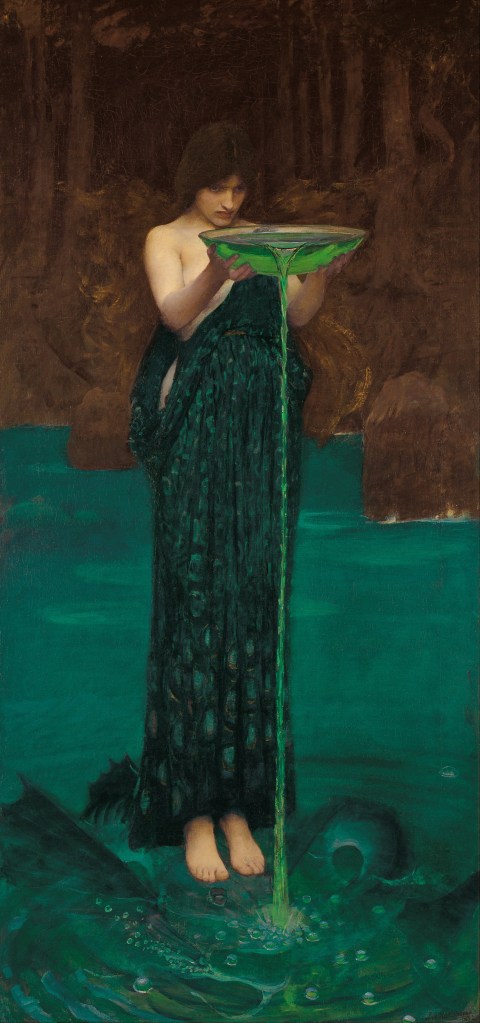
Flying ointments are a fascinating area of witchcraft history, particularly in the traditions associated with late medieval and early modern Europe. In trial records, we get a glimpse at supposed recipes for plant concoctions said to have been used by witches for spirit flight.
What is interesting about the flying ointments is that many recipes attributed to being used by the women on trial could be very harmful if reproduced. While a topical ointment might seem safer than ingesting a plant directly, toxic plants like monkshood or hemlock could have dire and potentially deadly consequences.
The appearance of these plants in historical flying ointment recipes has led some scholars to doubt whether or not they would have been of any actual use. I feel that the fact that these ointments were in the trial records at all, even sensationalized, hints at an actual practice of herbal infused ointments by folk herbalists for altered states of consciousness.
As is common in ecstatic witchcraft, altered states can be a gateway into the realms of spirit. These states loosen the Fetch from the witch’s physical form, allowing us to go forth from the body, into the deep dimensions of space, time, and the Spirit World.
Modern Poison Path practitioners may work with these witching herbs in ritual and other forms of plant-spirit practice, without necessarily ingesting them or seeking their more highly toxic effects.
One such herbalist doing this kind of work is S. A. Lawless of The Poison Garden. Check out her amazing work and baneful herbal products. I’m still dreaming of being able to buy her mandrake perfume again, which she no longer seems to be selling or making. I only have a few precious drops left of this magical scent.

Occult Herbalism in Practice
Why should we bring occult herbalism and poisonous plant medicine into practice? Witchcraft is a practice that requires us to be present and do the work. The same applies to taking up the mantle of occult herbalism. For those of us called to the poisonous plants, we have work to do, yes on ourselves, but also in order to be of service to the collective.
The poisonous plant spirits have been emerging more and more in our consciousness in recent years. As my plant teacher Kathryne Solie emphasizes, it is their time.
After spending the past seven years, as of this writing, intimately entwined with the medicine of poisonous plants, I know in my deepest soul and from experience how healing this path can be. While this isn’t a path of love and light alone, it is a path that includes profound compassion, love, and liberation.
To bring the wisdom of these plants to fruition in our own lives, we need to take action to live and act differently once the plants have helped reveal where we are stuck or have distorted views of reality.
And while perfectionism is not the goal, becoming aware of where we can take responsibility for our path and our own work is a good step toward a more healthful, balanced, and whole experience.
Dancing with the Darkness & the Light
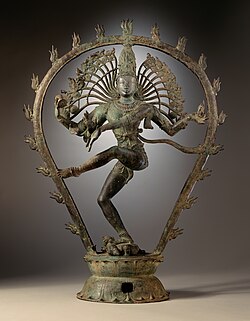
In Hindu mythology, the god Shiva is said to have swallowed the poison that emerged from the cosmic ocean, to keep the Earth from destruction. An important part of this story, though, is that he did not do this alone. Goddess Parvati came and pressed onto Shiva’s throat, thus keeping the poison from filling his entire body.
His throat turned blue, earning him the epithet Nilakantha, which translates to ‘Blue-Throated One.’ Blue is also a deeply spiritual color, often associated with the throat chakra, truth, visionary states, and creative expression.
Blue is sacred in my ecstatic witchcraft practice and takes up a unique space, along with purple and violet, as a color of poison and the Divine. In the Feri tradition, blue is associated with the God-Self and the Blue Gods of Faery including Melek Ta’us the Peacock Angel and Dian y Glas.
When we choose the path of poison, to dance with both darkness and light, it is not in favor of one or the other, but a recognition of both forces. It brings the Above realms and the Below realms together into a third Other, a wholeness at the center, the heart, and into a space of love, service, and compassion for self and others.
The Shiva story reminds us that meeting with poison requires restraint and boundaries. We need a stop valve, we need support in damming up the chaos.
From our human vantage point, we cannot deny that we have our shadows. Our encounters with the poisonous plant spirits, in the right spiritual dose, help us confront those challenges. As the famous Renaissance physician and “Father of Toxicology” Paracelsus is quoted saying:
“What is there that is not poison? All things are poison and nothing is without poison. Solely the dose determines that a thing is not a poison.” (1)
Love & Liberation
The Poison Path, like many other plant medicine paths, is one of consciousness exploration and a deepening relationship with the great Mystery.
Whichever plants have called your soul, when we surrender our consciousness to the plant spirits, the cosmos, psychedelics, and other entheogenic substances, we get a chance to relinquish the rigid walls of the ego. We can step outside of the ‘I’, even if just for a brief moment.
We are letting the boundaries of the known soften into the unknown, unveiling the Unseen and the terrifying power of the Universe. We can experience expansive states of love and interconnection, the mystifying oneness of the mind of the Divine.
And while embodied, we will always return to our material conditions, complete with all our issues, complexes, traumas, and societal sicknesses. Still, we will have traversed a piece of liberatory divine love and wholeness. Something to bring back or carry with us as we head even deeper into the cavernous mysteries of the soul.
References
(1) Grandjean P. Paracelsus Revisited: The Dose Concept in a Complex World. Basic Clin Pharmacol Toxicol. 2016 Aug;119(2):126-32. doi: 10.1111/bcpt.12622. Epub 2016 Jun 24. PMID: 27214290; PMCID: PMC4942381. https://pmc.ncbi.nlm.nih.gov/articles/PMC4942381/


Leave a comment