13 minutes read time.
Qetesh is an ancient Levantine goddess associated with love, healing, beauty, sensuality, and sacred pleasure. Her name derives from the Semitic root meaning holy, revealing her role as a goddess of divine power.
Qetesh is also known as Qedeshet, Qudshu, or Qadshu, and her worship became integrated into ancient Egypt during the New Kingdom period.
Let’s explore the iconography, powers, and mysteries of Qetesh, an ancient Canaanite-Egyptian goddess of love, beauty, and divine power, and how she may be called upon in your ecstatic witchcraft practice.
Is Qetesh guiding your soul’s path?
Take me to the Goddess Quiz
Take the Goddess Quiz to find out.
Table of Contents
- Who is the Goddess Qetesh?
- Qetesh Correspondences
- Qedeshet Symbolism in Ancient Art
- Qetesh & the Serpent
- A Goddess in Her Own Right
- Deeper into Qetesh’s Mysteries: The Holy One
- Entering the Temple of Qetesh: My Personal Story
- How to Work with the Qetesh Goddess
- Devotional Invocation Prayer to the Goddess Qetesh
- Final Goddess Message
- Sources & Further Research
- A Note About Blue Water Lily/Blue Lotus
Who is the Goddess Qetesh?
Qetesh is a goddess who was venerated in the ancient Levant and Egypt. As a goddess of love, sacred sexuality, and pleasure, she is called on goddess-worshipping and plant witches today to tap into the magic of embodied sensuality, divinity, and devotion to love and pleasure.
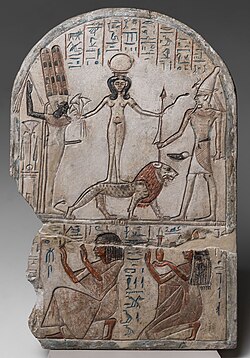
She is depicted standing nude on the back of a lion. In one hand she holds a serpent staff and in the other mind-altering blue water lilies. She is flanked on either side by Egyptian gods in their healing and fertile aspects, Resheph (Rashpu in ancient Canaan) and Min respectively.
She is connected with the planet of love, Venus. This is emphasized through her Hathor-style headdress and hair. Hathor as a goddess of love, fertility, and joy, is also associated with the planet Venus.
One way we know that Qetesh is not a deity native to Egypt is the way she is depicted in ancient Egyptian art.
For one, she is naked. Egyptian goddesses are not depicted nude. The other is that she is facing us. Egyptian gods and goddesses do not tend to be facing the viewer in ancient Egyptian art.
Qetesh Correspondences
- Names: Qodesh, Qedesh, Kadesh, Qedeshet, Kedesh, Kades, Qudshu, Qadesh
- Plants: Blue water lily, Damiana, Rose, Aphrodisiacs
- Symbols: Hathor headdress
- Planet: Venus
- Animals: Lions and snakes
- Epithets: ‘Holy One,’ ‘Great of Magic, Mistress of the Stars,’ ‘Lady of Heaven’
- Associations: Love, pleasure, sensuality, sexuality, healing (medicine & magic), beauty, ecstasy, divinity, femme power
- Attending Spirits: Female genies and jinniyah
- Time of Day: Night
- Moon Phase: Waxing Moon
- Tools: Serpents & plant medicines
- Adornments: Metallic waist belt, anklets, bracelets, necklace
- Gemstones: Azurite, Lapis lazuli, Opal
- Colors: Deep pinks, mustard yellow, gold, magenta
- Metals: Gold and bronze
- State of Being: Euphoria, bliss, ecstasy
- Offerings: Honey, perfume, yellow candles, adornments, herbal infused wines, frankincense smoke, holy plant medicines, sacred sexuality
- Similar Goddesses: Inanna, Ishtar, Astarte
Qedeshet Symbolism in Ancient Art
Images of the Qetesh Goddess are dripped in rich symbolism. Let’s dive into the meaning of each of her implements, animals, and adornments.
Nudity: Being a naked goddess, this implies that Qetesh is wise in the ways of sensuality and pleasure. We can read her as a goddess of sacred sexuality. In this case, her nudity is a sign of being a foreign deity, but this doesn’t prevent her from being centered, venerated, and worshipped.
Standing on a Lion: A symbol attributed to many goddesses, standing on the back of a lion is a sign of divine power. It shows a mastery over the animal realm and can be associated with strength and leadership.
Hathor-Style Headdress: Borrowed from Hathor but used by many ancient goddesses, the Hathor-style headdress represents two horns holding the Sun. The horns of the crown facing upward are a sign of divinity and the Sun is a symbol of life-giving fecundity. This reveals Qetesh as a goddess in service to life and creation.
Serpent: A symbol was used in the ancient world as a symbol of healing. The serpent is a symbol for life, death, and renewal (healing). It is also often connected with plant medicine and is the form many plant spirits take, especially consciousness altering ones.
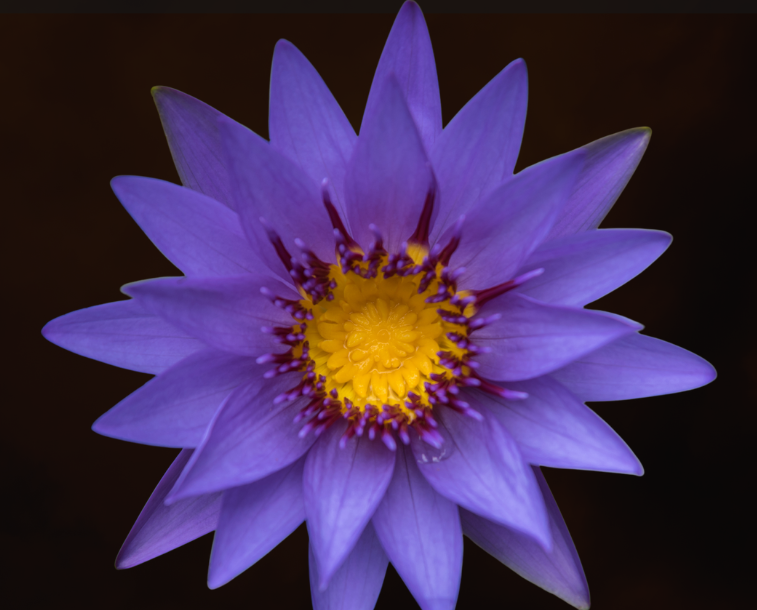
Blue Water Lilies (Egyptian Blue Lotus): The blue water lily was a divine plant in ancient Egypt. Associated with the god Nefertem, the blue lotus represents creation from the primal waters. In the Egyptian Book of the Dead it says,
Rise like Nefertem from the blue water lily, to the nostrils of Ra and come forth upon the horizon each day. (2)
The blue water lily has psychoactive properties. Soaked in wine by the ancient Egyptians, it was used as an aphrodisiac inebriant (along with mandrake and poppies) for heavenly love-inducing connection.
This plant is heart-opening, relaxing, and euphoric, it is a potent love medicine and makes sense that it would be held by our goddess of sexuality and pleasure.
Qetesh & the Serpent
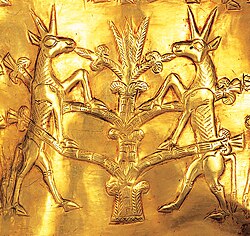
In ancient Canaan, El, the head of the Canaanite pantheon creates a dragon spirit named Shataqat to heal illness (1). She holds a wand or staff as her healing tool and takes the form of a dragon, an ancient version of the serpent.
Her role is specifically to “release the knot of illness.” This deepens our understanding of the serpent and the healing rod. The combination of Shataqat‘s serpentine nature and healing staff is just another example of how the serpent and the staff are linked to healing.
As the serpent is also linked with the protection of life, regeneration, transformation, renewal, and the magic of these experiences, we can infer that the Canaanite goddess Qetesh is swimming in the same marbled waters of magic and medicine (3).
This also brings up another healing symbol from the ancient Levant, the bronze serpent idol known as Nechustan (נְחֻשְׁתָּן). In the Book of Numbers, Moses is directed by G-d to construct a serpent staff. The Israelites, who are being attacked by fiery venomous serpents, were to petition Nechustan to bring about their healing.
It would stand to reason that as the Qetesh goddess is holding the serpent would be another example of her connection with healing.
Healing comes in many forms beyond the physical. As a goddess who is associated with love, sensuality, and divine power, perhaps these are areas of healing that Qetesh can support us in.
To me, she represents being a vessel for our divinity. And this comes through a closer connection with her domain of sensuality, embodiment, sensory pleasure, sexuality, love, and ultimately, our magical essence, which can feel like pure ecstatic bliss.

A Goddess in Her Own Right
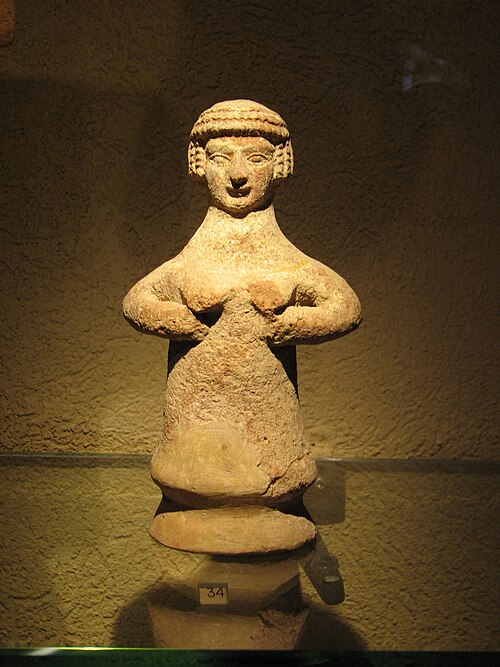
Although Qetesh has similar iconography and roles to other goddesses that span ancient Egypt, the Levant, and Mesopotamia, she is a goddess in her own right.
Scholars have debated who she is, a depiction of Phoenician Astarte, a version of Ishtar from Babylon, perhaps Inanna, or maybe Asherah or Anat from Canaan.
Over several years of devotional work with Qetesh, I have come to understand her as a unique being with a distinct domain. Regardless of whether the origins of Qedeshet are from another Goddess, she has blossomed into her own goddess complex.
She is her own being and presents herself to me as such. She is a powerful ally and I worship her in dyad alongside Asherah. In the ancient world it was common to worship deities in pairs. I am following in that tradition.
Her worship alongside Asherah, an ancient Hebrew mother goddess (4), venerated in groves and trees, adds another layer of symbolism to the life-affirming purpose of our work together.
Deeper into Qetesh’s Mysteries: The Holy One
Names used for Qetesh include Qudshu and Qadshu, linking her with the word for holy in Hebrew: kadosh (קָדוֹשׁ).
This highlights her connection to the sacred and further implies that the areas of magic she is associated with including love, sexuality, sensuality, and healing are sacred acts.
As written in the Charge of the Goddess by Doreen Valiente in the 1950s and later adapted by Starhawk:
“All acts of love and pleasure are my rituals.”
Our pleasure is sacred. The role that Qetesh can walk us towards is a sensual embodiment of our divinity and the healing that comes with this.
In my experience, she is fierce like her war goddess counterparts Ishtar and Astarte, demanding a lot of her devotees. But in turn, she shares with us the power that comes with being an ecstatic lover of beauty and the mystery.
Entering the Temple of Qetesh: My Personal Story
For me, she has appeared as a patron of queer women, femmes, and sapphic practitioners of the craft. At first she did not reveal herself to me, but an attendant spirit showed up to guide the way to her astral temple.
Qetesh is not a goddess whose favor was easily won, but she has been patient as I have grown into her mysteries. I had much healing to do before I could fully enter her temple, and even now I am constantly learning more and more about her magic.
My devotion to her has come through plant rituals and embodying the energies of aphrodisiac plant healing, especially plant potions to enhance the senses, open the heart, and deepen into the altered states of magic, sensuality, healing, joy, pleasure, and dreams.
Plants that open the gateway to Qetesh’s mysteries
- Blue Water Lily (Egyptian Blue Lotus)
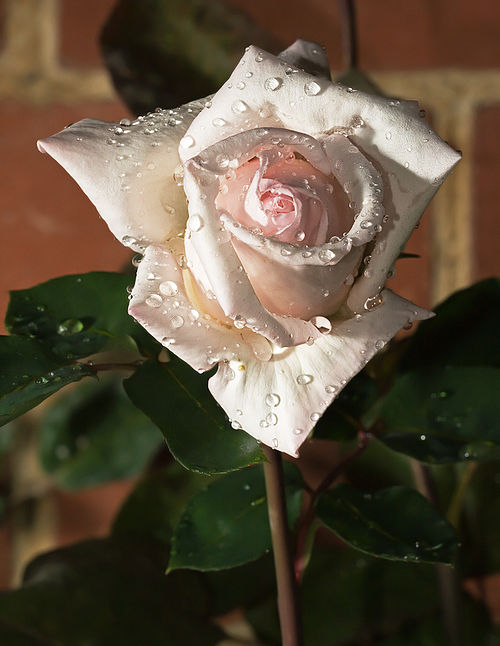
- Rose
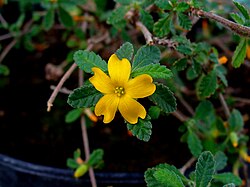
- Damiana
I call this plant potion blend Sex Magic, which I make and sell as a cordial (herbs soaked in brandy and honey).
Other ways I show devotion to my goddess are through wearing magical adornments and special jewelry dedicated to her.
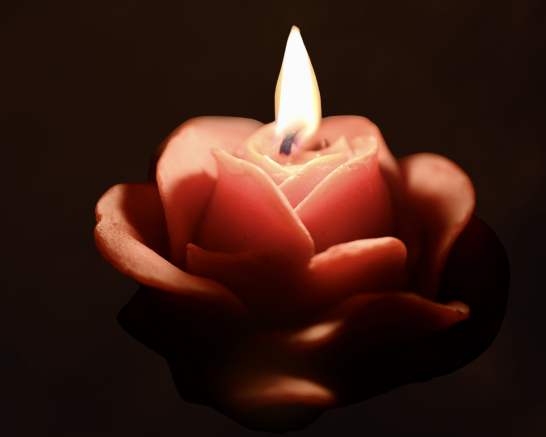
I burn gold or yellow candles to Qetesh and build devotional relationships with some of her attending spirits, who are female genies or the jinniyah.
Qetesh came into my magical practice as a force of intense feminine power. She helped transform my witchcraft into something that was deeply devotional not only to the gods but to myself and my path as well.
She brought me into a powerful sense of the sacred with plant medicine, nudging me to work with Blue Lotus and other pleasure plants for love and heart-healing connection.
How to Work with the Qetesh Goddess
- Approach her with an open heart and no expectations
- Use your intuition to identify what kind of offering she would like to receive from you
- Light a gold or yellow candle
- Prepare yourself ritually. She is a goddess of beauty after all! Get dolled up, put on make-up, ritual adornments, jewelry
- Take a breath, be naked, and stand in her posture, imitating what you see in her artwork with arms outstretched to either side of you
- Close your eyes and breathe slowly, say the devotional invocation prayer (shared below) to Qetesh and wait steadily until you feel her presence
- An attendant spirit of hers might show up first, greet this being with gratitude and without expectation
- Give your experiences space to take root and grow over time, Qetesh loves consistent devotion
- And if the path of Qetesh is right for you, you will know soon enough
Devotional Invocation Prayer to the Goddess Qetesh
Holy One, Lady of Heaven, Sister Goddess of Love, Magic, and Healing. I call on you to come unto me
Make your presence known to me so I may experience your mysteries
I open myself as a vessel of divinity in order to receive you
I stand in front of you, naked, and with a heart of love to meet your magic
Align me to your work so I may share in your serpentine and plant wisdom
As is my will
So it is
*sing or chant* Qudshu, Qudshu, Qudshu…Qudshu, Qudshu
*remain open to whatever experience arises* And Say, Qetesh, Welcome
Final Goddess Message
If Qetesh shows up in your magical practice, she may be inviting you into a deeper relationship with beauty, pleasure, and the sacred power of embodiment.
If you’re unsure which goddess is calling to you, you can take my Goddess Quiz to explore which divine ally may be guiding your path.
Is Qetesh guiding your soul’s path?
Take me to the Goddess Qui
Take the Goddess Quiz to find out.
Are you being called to walk the path of pleasure, beauty, and ecstasy?
The Goddess Qetesh is a guide for those of us who are seeking healing through consciousness-altering and aphrodisiac plant medicines and awakening to our divinity.
Sources & Further Research
- Dawson, Tess. The Horned Altar: Rediscovering & Rekindling Canaanite Magic. Woodbury, MN: Llewellyn Publications, 2013
- https://en.wikipedia.org/wiki/Nefertem
- Golding, Wendy Rebecca Jennifer. Perceptions of the Serpent in the Ancient Near East: Its Bronze Age Role in Apotropaic Magic, Healing and Protection. Master’s dissertation, University of South Africa, Pretoria, 2013.
- Wilson, Leslie S. The Serpent Symbol in the Ancient Near East: Nahash and Asherah—Death, Life, and Healing. Lanham, MD: University Press of America, 2001.
- Bertol, Elisabetta, Vittorio Fineschi, Steven B. Karch, Francesco Mari, and Irene Riezzo. “Nymphaea Cults in Ancient Egypt and the New World: A Lesson in Empirical Pharmacology.” Journal of the Royal Society of Medicine 97, no. 2 (2004): 84–85. https://doi.org/10.1177/014107680409700214.
- Patai, Raphael. The Hebrew Goddess. Detroit: Wayne State University Press, 1990.
- Redmond, Layne. When the Drummers Were Women: A Spiritual History of Rhythm. New York: Three Rivers Press, 1997.
- Smith, Mark S. The Early History of God: Yahweh and the Other Deities in Ancient Israel. Grand Rapids, MI: Eerdmans, 2002.
A Note About Blue Water Lily/Blue Lotus
The original Blue lotus species, Nymphaea caerulea, is a plant that is not readily available. You can get blue water lilies, which are more purple in color from suppliers in Thailand and they are sold as Nymphaea caerulea but I am not sure if they are original to the plant used in Ancient Egypt. And I can attest to the fact that these varieties from Thailand are lovely, smell amazing, and have a euphoric mind-altering effect when prepared properly. I have noticed condescending content being made that highlights how people ‘don’t know’ they aren’t working with the original blue water lily used by the Ancient Egyptians. And to this I say, many of us know but that does not diminish the value of working with the plants that are available to us. There are countless species of plants, take tobacco for example, that can be worked with and will carry a similar spirit, regardless of the species. Plants are their own beings and they reveal themselves in the ways that we have available to us, so we can work together and bring about healing, medicine, and magic. We can trust ourselves and our personal relationships we build with plants and how they direct us to work with their spirit and medicine.
Disclaimer: The information in this article is for educational purposes only. Please ensure that you do appropriate research if you are considering ingesting any plants and ensure you are informed of toxicity, potential allergies, side effects, and contraindications.



Leave a comment